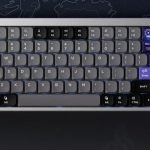
Best Value 65% keyboard - Magger68
The Magger 68 by Lumi Key might have a quirky name, but it’s packed with features that make it a standout in the world of Hall Effect (HE) keyboards. In this review, I’ll dive into the key aspects of this keyboard, from its build and performance to its pricing and software experience, and explain why it might just be the perfect choice for your next setup.
Design and Variants
The Magger 68 comes in a few different colorways, but the version I’m reviewing today is the Professional Ano Black. This version boasts a slightly different look with a more premium case and features Magnetic Jade Pro switches. The other variant is the Performance Version, which has a more minimal case and comes with Magnetic White Pro switches, also made by Gateron. The main differences between the two are the tolerances and the sound profile—while both variants offer similar gaming performance, the Professional version provides a better typing experience.
At the time of writing, the Performance Version is priced at around $120 USD, while the Professional Version is slightly more expensive at $150 USD. If you’re on a budget, the Performance Version offers great value, but if you’re looking for a smoother and more refined typing experience, the Professional Version is the way to go.
Performance
When it comes to performance, the Magger 68 impresses. With 8kHz polling and 4kHz scanning, the keyboard offers incredible responsiveness that’s ideal for gaming. While it doesn’t fully utilize the 8kHz polling rate, the 4kHz scanning still provides faster response times than many other Hall Effect boards, including the Wooting 60HE, making it a great option for competitive gaming. The Jade Pro switches are among the best-sounding Hall Effect switches I’ve tried, providing a satisfying typing experience with a smooth actuation.
One thing worth noting is that the stabilizers on the Magger 68 are well-lubed and tuned out of the box, resulting in a quiet and smooth experience with minimal rattle, which is a big plus for stock Hall Effect boards.
Software Experience
While the hardware performance is exceptional, the software experience leaves something to be desired. The software is fairly basic and lacks some key features that would elevate it. For example, remapping keys can be tricky since there’s no save button, and sometimes configurations don’t register properly, requiring you to redo them. This can be frustrating, and it’s clear the software has room for improvement.
One suggestion would be to create a browser-based version of the software, similar to Wooting’s setup, which would be much more intuitive. Despite the software hiccups, once you’ve configured the settings, you can essentially “set and forget” the keyboard, and it will perform flawlessly.
Value for Money
For the price, the Magger 68 is an exceptional value. At around $120 USD for the Performance Version and $150 for the Professional Version, it offers Hall Effect technology and a premium typing experience at a fraction of the price of other top-tier options like the Wooting 60HE or Wooting 80HE. The performance gains at this level are hardly noticeable to the naked eye, making the Magger 68 a great choice for anyone looking for high-quality performance without breaking the bank.
Conclusion
In conclusion, the Magger 68 is an outstanding choice for anyone looking for a 65% Hall Effect keyboard. The Jade Pro switches offer one of the best stock sound profiles for Hall Effect switches, and the keyboard’s performance is on par with more expensive models like the Wooting 60HE. Despite the software flaws, the hardware performance and overall experience make this keyboard a great value for its price.
As of now, the Magger 68 has become my go-to Hall Effect keyboard and currently sits at the top of my list, even replacing the Wooting 60HE in my setup. If you’re in the market for a responsive, customizable, and affordable 65% keyboard, the Magger 68 is definitely worth considering.